
Find shapes around us
Words like above, below, and beside help your child describe their world clearly and follow directions with confidence. These words come back when they read simple charts in 1st grade and picture graphs and bar graphs in 2nd grade, and whenever they read a map. Spotting shapes in everyday objects also leads to describing shapes by their sides and corners in 1st grade.
In this video, your child will learn to find shapes and say where they are.
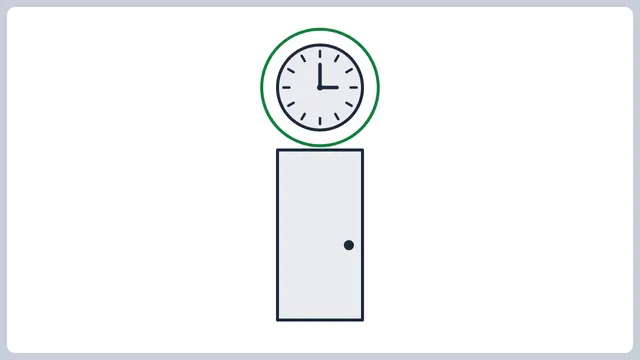
The lesson stops at each question for your child's answer.
Three problems, each a little harder
Each problem is worked step by step. Your child will solve the last one before Bobby shows how.
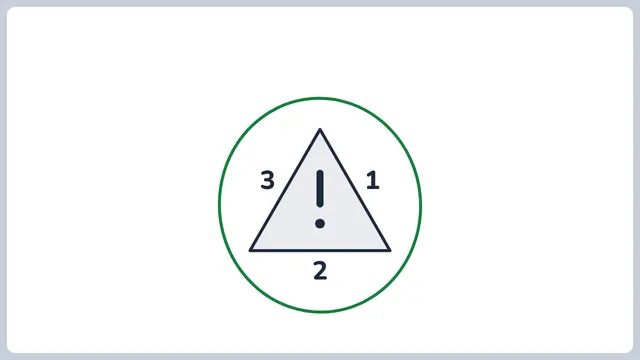
Example 1
What shape is the sign?
Example 2
What shape is above the door?
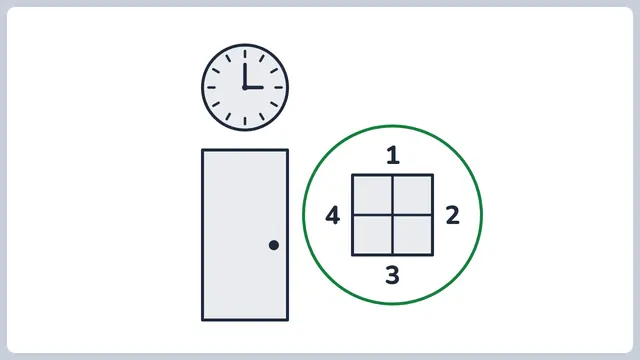
Your child's turn
What shape is next to the door?
The three key steps
- 1Trace around it with your finger.
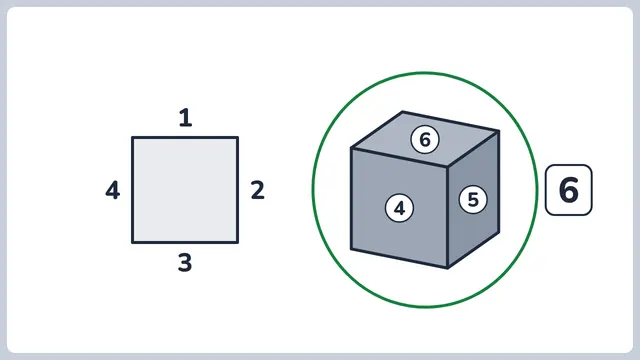
- 2Count its sides, or see if it is round.
- 3Say its shape and where it is.
Mistakes to listen for
- Using "beside" and "behind" as if they mean the same thing, so a chair next to the table is "behind" it.
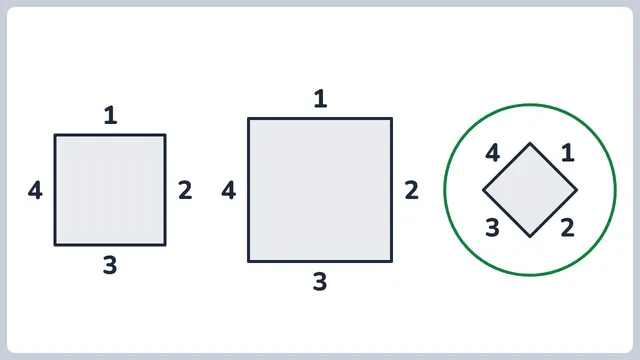
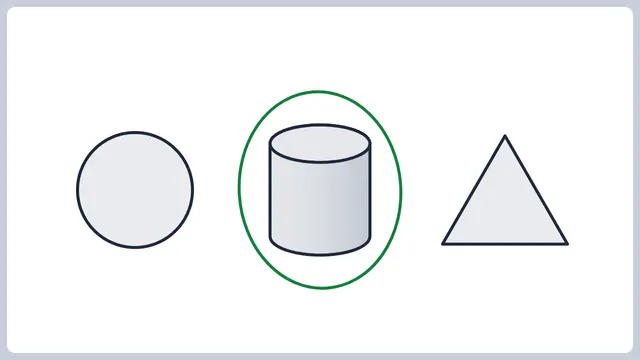
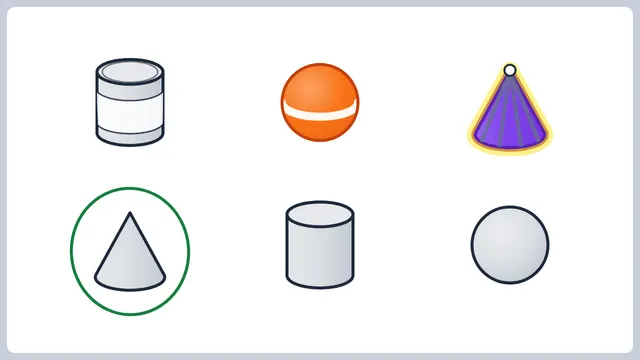
- Calling a soup can a circle or a box a square, naming a flat face instead of the solid shape.
- Describing position only from their own side, not seeing that a ball in front of a tree is behind it from the other side.
The lesson shows every step, so your child sees why it works. Read our parent's guide to spotting shapes and saying where things are →
Is your child ready to practice what they've learned?
Bobby's Math Club offers unlimited practice for free.
Join the clubMore kid-friendly lessons
More Kindergarten Geometry, with questions your child answers along the way.
Questions parents ask
Does my child need an account to watch?
No. You can watch this on any device at any time. If your child would like to practice spotting shapes and saying where things are, and you'd like parent-friendly reports on your child's progress and growth, you can join Bobby's Math Club for unlimited free practice.
What happens when my child answers a question?
A right answer gets a cheer, and the lesson carries on. If your child isn't sure, they can tap "I don't know yet", and Bobby gives the answer and shows another example. Nothing is scored or stored.
Is this the same lesson that's on YouTube?
Yes. Here, the lesson stops at each question and waits for your child to answer. On YouTube, each question stays on screen for a few seconds, and then the lesson plays on.
Where can I learn more?
There's a short, kid-friendly lesson like this one for every Pre-K to 5th grade math skill, all in our video library. Our parent's guide to spotting shapes and saying where things are has more on where kids get stuck and how you can help at home. In the club, your child practices at just the right level, about five minutes a day, and you get parent-friendly reports as they grow. Learn more about how it works →
Practice spotting shapes and saying where things are
Questions at your child's level, about five minutes a day, on spotting shapes and saying where things are and whatever PK-5 skills they need to develop. Unlimited practice, free forever.
Join the club