
Into Math Kindergarten, Unit 4: Addition Concepts
In this unit, your child learns what adding means: putting groups together and finding how many in all. They show addition with fingers, objects, and drawings; solve story problems; break numbers into two parts; and start knowing small sums quickly. It builds on counting and comparing to 10 and leads into subtraction next.

By Robert “Bobby” BarnettMath teacher, parent, and founder of Bobby’s Math Club
What is my child learning in Unit 4?
- Showing addition with fingers, objects, or drawings, and writing equations such as 3 + 2 = 5. Learn more about showing addition in many ways: Showing addition in many ways · Learn more about showing subtraction in many ways
- Solving addition story problems within 10 by acting them out or drawing a picture of what happens. Learn more: Adding and subtracting story problems within 10
- Breaking a number up to 10 into two parts in different ways, such as 7 = 5 + 2 and 7 = 4 + 3. Learn more: Splitting numbers up to 10 into two parts
- Adding within 5 quickly, such as knowing 2 + 2 = 4 and 3 + 2 = 5 without counting every time. Learn more about adding fluently within 5: Adding fluently within 5 · Learn more about subtracting fluently within 5
Sample questions to try together
These are real questions from our practice. Tap the speaker to hear one read aloud, or the light bulb for a hint, and talk about the answer together.
Question 1 of 3
Start at 7 and hop back 2. Where do you land?
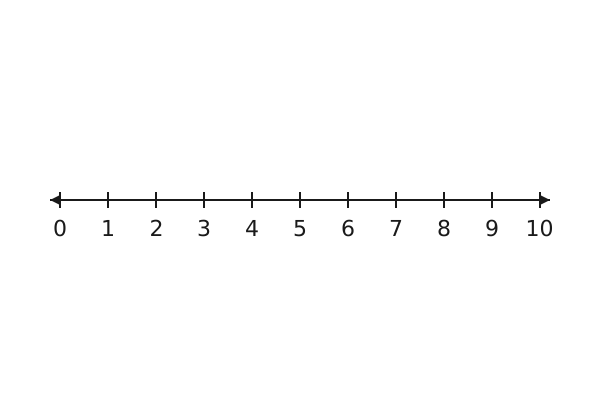
- 2
- 9
- 5
How you can help
- Make up adding stories with stuffed animals: 4 bears are at a picnic and 3 more come. Ask how many are at the picnic in all, and let your child show it.
- Hold 6 crackers in your two hands, some in each. Open your hands and talk about the two parts, then try a different split of the same 6.
- Play quick finger flash: hold up 2 fingers on one hand and 3 on the other. See if your child can say 5 without counting each finger.
Where kids can get stuck
- Copying 3 + 2 = 5 correctly, but not being able to show it with objects or a picture.
- Counting every small sum from 1 on their fingers, even 1 + 1, so adding stays slow.
- Thinking 6 = 4 + 2 is wrong because they expect the answer to come after the equal sign.
Practice makes perfect
Bobby's Math Club has practice problems that adapt to your child’s level, each with a detailed explanation and an easy-to-follow video, so your child can build confidence in these skills one step at a time.
Words your child will hear
- add
- To put groups together to find how many in all.
- plus
- The sign + that means add.
- equal sign
- The sign = that means both sides are the same amount.
- equation
- A number sentence with an equal sign, like 3 + 2 = 5.
- sum
- The answer when you add numbers together.
- in all
- The total when groups are put together.
- part
- One of the pieces that make up a whole number.
- whole
- The total amount, before it is split into parts.
Want to help your child master adding within 10?
In Bobby's Math Club, your child practices these skills at just the right level, with a hint when they need one, a clear explanation after every question, and kid-friendly videos. Unlimited practice is free.
Join the club
Written by Robert “Bobby” Barnett
Bobby is an award-winning math teacher, the author of Meet Every Learner’s Needs, and the father of two elementary-school math learners. He uses Bobby’s Math Club with his own kids a few times every week. Learn more or contact Bobby.
Which math standards does Into Math Kindergarten Unit 4 cover?
Into Math Kindergarten Unit 4 covers these math standards. Each one links to what it means, sample questions, and teaching strategies.
For teachers: Unit names and order vary between editions and districts, so your school’s own materials have the exact sequence. Learn how Bobby's Math Club can help your students grow.