
Showing subtraction in many ways
In kindergarten, children learn to show taking away with objects, fingers, drawings, and acting out; to explain what is left in words; and to write it as an equation like 5 - 2 = 3.

By Robert “Bobby” BarnettMath teacher, parent, and founder of Bobby’s Math Club
Try these with your child
These are real questions from our kindergarten practice. Tap the speaker to hear one read aloud, or the light bulb for a hint, and talk about the answer together.
Question 1 of 3
Start at 7 and hop back 2. Where do you land?
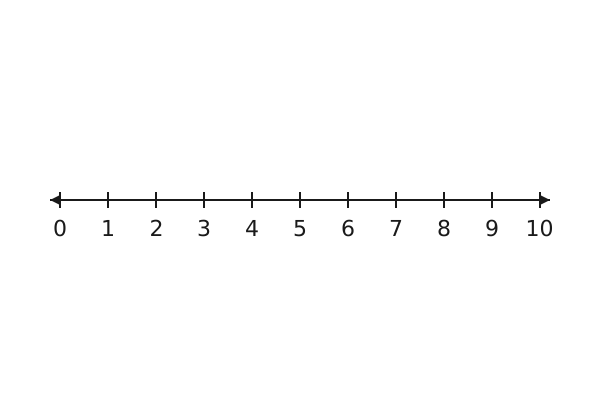
- 2
- 9
- 5
Why this matters
Your child already knows what it means when the last cookie gets eaten. Showing subtraction with toys, drawings, and fingers connects that feeling to the minus sign, so it comes to mean some are gone and some are left. That picture carries into 1st grade, where your child solves take-away stories within 20 and learns that subtracting can mean finding a missing part. You'll see it whenever a tower loses its top blocks.
If drawing or acting out take-away is still tricky, your child can review showing addition in many ways, which uses the same tools to put groups together.
Where kids can get stuck
- Drawing a subtraction problem as two separate groups, such as 5 circles and 2 circles, instead of crossing out 2 of the 5.
- Reading the minus sign as plus, or adding both numbers whatever the sign says, so 6 - 2 becomes 8.
- Writing the numbers in the wrong order, such as 2 - 5 = 3, for a story about 5 frogs with 2 hopping away.
How you can help
- Read a take-away rhyme such as "Ten in the Bed," and after a verse ask your child to write what happened in that verse as a number sentence, like 4 - 1 = 3.
- Build a tower of 8 blocks and knock off 3, then ask your child to draw what happened, crossing out the blocks that fell, and tell you how many are still standing.
- Take away fingers together while you wait in line. Hold up 7, fold down 3, and ask your child to copy you and say it as a sentence: seven take away three is four.
The kid-friendly video below is a nice one to watch together. For more, Bobby's Math Club has free practice at your child’s level.
Kid-friendly explanation
Questions parents ask
Why is my child crossing things out to subtract?
Crossing out shows exactly what happens in a take-away story. Your child draws 7 apples, crosses out the 2 that were eaten, and counts the 5 left. The crossed-out apples are still on the page, so your child can see both the part that went and the part that stayed. That picture matches 7 - 2 = 5, and it gives them a way to check.
What if my child can show adding but finds showing subtraction harder?
That's common, and it isn't your fault or your child's. With adding, everything stays on the table. With taking away, some things disappear, and your child has to remember them. Start by acting it out, then move to a drawing, and only then to the equation. Let your child stay at each step until it feels easy.
Should my child say "take away" or "minus"?
Either is fine. "Take away" describes what happens in the story, which is why it is often the first phrase kindergartners use, and "minus" is the name of the sign. Your child will hear both, along with "left" and "fewer." What matters is that the words match what happens: for 6 - 2, there are 6 things, 2 go away, and 4 are left.
Make learning math fun
Bobby's Math Club turns kindergarten math practice into something fun to do together.
- Unlimited practice, completely free
- Practice that starts where your child is and grows with them
- Hints when they are stuck, and a celebration when it clicks

Written by Robert “Bobby” Barnett
Bobby is an award-winning math teacher, the author of Meet Every Learner’s Needs, and the father of two elementary-school math learners. He uses Bobby’s Math Club with his own kids a few times every week. Learn more or contact Bobby.
Ready to watch your child’s confidence grow?
Your kindergarten child can start today with free, unlimited practice that grows with them.
Join the clubNote for teachers: This skill is covered by Common Core math standard K.OA.A.1: “Represent addition and subtraction with objects, fingers, mental images, drawings, sounds (e.g., claps), acting out situations, verbal explanations, expressions, or equations.” Learn how Bobby's Math Club can help your students grow. (Common Core K.OA.1)