
Building and drawing shapes
In kindergarten, children learn to model shapes from the world around them by building them from sticks and clay balls and by drawing them.

By Robert “Bobby” BarnettMath teacher, parent, and founder of Bobby’s Math Club
Try these with your child
These are real questions from our kindergarten practice. Tap the speaker to hear one read aloud, or the light bulb for a hint, and talk about the answer together.
Question 1 of 3
What shape is this building block?
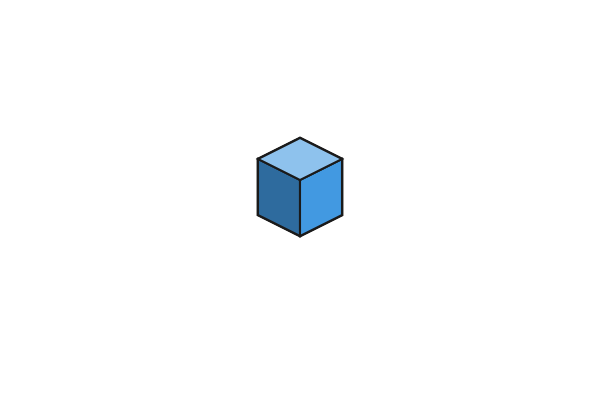
- Square
- Cube
- Sphere
Why this matters
Building a square from sticks shows your child how a shape is put together: 4 equal sides and 4 corners. This leads to 1st grade, where they build and draw shapes with given features, and to 2nd grade, where they draw shapes with a set number of sides or corners. In 3rd grade, finding the distance around a shape builds on knowing its sides well.
Where kids can get stuck
- Drawing a triangle with rounded corners or curved sides, instead of three straight sides meeting in sharp corners.
- Building a square from four sticks of different lengths and still calling it a square.
- Adding or leaving out sides when drawing a real object, such as a window, by copying details instead of the shape.
How you can help
- Use dry spaghetti and small balls of playdough to build a triangle, a square, and a rectangle together, counting the sides and corners of each.
- Ask your child to draw three shapes they can see from where you are sitting, such as a rectangle in a window or a circle in a plate.
- Use cotton swabs or craft sticks on the table to build the shape of a house, a door, or a road sign, then talk about the shapes used.
Want a little more? Watch the kid-friendly video below together, or try Bobby's Math Club for free practice that adapts to your child.
Kid-friendly explanation
Questions parents ask
Why does my child build shapes from sticks and clay?
Building a shape from parts shows your child what the shape is made of. A triangle needs 3 sides that meet at 3 corners, and a square needs 4 equal sides. Making shapes with their hands helps children notice those features in a way that looking at pictures does not.
My child's drawings of shapes are wobbly. Does that matter?
Not much in kindergarten. Hand control is still developing, and the goal is to show the important features, such as the number of sides and whether they are straight or curved. If your child's square has 4 sides and 4 corners, they understand the shape. Neater drawings come with time and practice.
What comes after building and drawing shapes?
Next, kindergartners put shapes together to make larger shapes, such as joining two triangles to make a square. In 1st grade, children build and draw shapes that have specific features, such as a shape with 4 sides, and combine shapes to make new ones in more complex ways.
Make learning math fun
Bobby's Math Club turns kindergarten math practice into something fun to do together.
- Unlimited free practice
- Practice that starts where your child is and grows with them
- Hints when they are stuck, and a celebration when it clicks

Written by Robert “Bobby” Barnett
Bobby is an award-winning math teacher, the author of Meet Every Learner’s Needs, and the father of two elementary-school math learners. He uses Bobby’s Math Club with his own kids a few times every week. Learn more or contact Bobby.
Ready to watch your child’s confidence grow?
Your kindergarten child can start today with free, unlimited practice that grows with them.
Join the clubNote for teachers: This skill is covered by Common Core math standard K.G.B.5: “Model shapes in the world by building shapes from components (e.g., sticks and clay balls) and drawing shapes.” Learn how Bobby's Math Club can help your students grow. (Common Core K.G.5)