
Using the words "first" and "last"
In Pre-K, children learn to use the words "first" and "last" to describe order and position, such as the first child in line or the last block on a tower.

By Robert “Bobby” BarnettMath teacher, parent, and founder of Bobby’s Math Club
Try these with your child
These are real questions from our Pre-K practice. Tap the speaker to hear one read aloud, or the light bulb for a hint, and talk about the answer together.
Question 1 of 3
Which circle is last in the row?
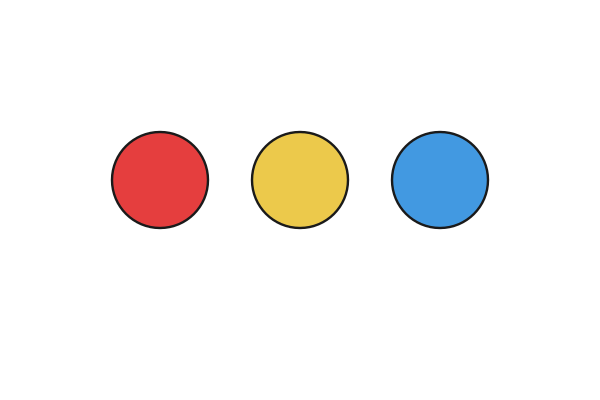
- The yellow circle
- The red circle
- The blue circle
Why this matters
First and last are your child's earliest words for order, which is a different idea from how many. They help your child follow steps, retell a story, and take turns, and they prepare the way for second, third, and tenth in later grades. Order matters in math too: counting starts with a first number, and reading a number line or working through a problem step by step depends on keeping things in sequence.
Where kids can get stuck
- Calling the biggest or favorite toy "first," even in the middle of the row, because first sounds like best.
- Naming the wrong end as first when a line faces a different direction, because they always read left to right.
- Mixing up "last" meaning most recent, as in "last night," with the end position of a line.
How you can help
- Line up toys for a pretend parade and ask your child which one is first and which one is last, then turn the parade around and ask again.
- Talk through the bedtime routine using first and last, such as "first we brush teeth, last we read a story," and let your child say the order back.
- Point out the first and last cars in the queue at a traffic light, or the first and last person in line at the grocery store checkout.
The kid-friendly video below is a nice one to watch together. For more, Bobby's Math Club has free practice at your child’s level.
Kid-friendly explanation
Questions parents ask
Why is my child learning first and last as a math skill?
First and last describe position in an order, which is an important math idea separate from counting how many. Children use order to follow steps, understand sequences, and later learn words such as second and third. Learning first and last gives your child the language to talk about where something is in a line or a routine.
My child knows first but mixes up last. Is that common?
Yes. First is often the word children hear most, especially in games and lines. Last can be confusing because it also means the most recent time something happened, as in "last night." Use the word in clear situations, such as the last block on a tower or the last page of a book, and point to it as you say it.
What comes after first and last?
Once children are comfortable with first and last, they begin learning words for positions in between, such as second, third, and fourth. These are called ordinal numbers. Children also use order in patterns, stories, and step-by-step tasks, and later in reading calendars and dates.
Make learning math fun
Bobby's Math Club turns Pre-K math practice into something fun to do together.
- Unlimited free practice
- Practice that starts where your child is and grows with them
- Hints when they are stuck, and a celebration when it clicks

Written by Robert “Bobby” Barnett
Bobby is an award-winning math teacher, the author of Meet Every Learner’s Needs, and the father of two elementary-school math learners. He uses Bobby’s Math Club with his own kids a few times every week. Learn more or contact Bobby.
Ready to watch your child’s confidence grow?
Your Pre-K child can start today with free, unlimited practice that grows with them.
Join the clubNote for teachers: This skill is covered by the Pre-K math learning standard PK.CC.6: “Identify "first" and "last" related to order or position.” Learn how Bobby's Math Club can help your students grow. (Pre-K standard PK.CC.6)